Adaptive leadership has become a critical capability for organizations seeking sustained success. Adaptive leaders can respond effectively to evolving business landscapes, inspire their teams in times of crisis, and maintain clarity and direction amid ambiguity. However, adaptability is not simply about a leader’s ability to endure challenges. It hinges on their capacity to communicate effectively with diverse teams, fostering a culture of trust, alignment and openness to change.
At the heart of adaptive leadership is the ability to tailor communication strategies to meet the needs of individual team members. As organizations become more complex, leaders must navigate different communication preferences and interaction styles to ensure every team member feels heard, engaged, and motivated. Without this tailored approach, leaders risk creating communication breakdowns, which can erode trust, hinder performance, and lead to disengagement. In contrast, according to the PMI report, organizations that prioritize effective communication are 3.5 times more likely to meet or exceed their financial performance goals.
The challenge lies in recognizing that no single communication style works for every situation or individual. Leaders who can adapt their style to suit the specific needs of their team members will be better equipped to drive performance, foster collaboration, and build organizational resilience. This is where the Social Dynamics model offers a powerful framework for leaders to understand their teams’ diverse communication preferences and adapt accordingly.
Yet, many leaders struggle to achieve this level of resilience because they rely on one-dimensional communication styles. These leaders often fail to recognize that different team members interpret information and respond to challenges in unique ways. For example, a direct, action-oriented communication style may motivate some employees but overwhelm others who require more time for reflection. In complex organizations, this lack of adaptability can lead to misunderstandings, low morale and diminished performance.
Leveraging Social Dynamics to improve Leadership Adaptability
The Social Dynamics model offers a structured framework for leaders to understand and manage the diverse interaction styles within their teams. By recognizing and adapting to these interaction styles, leaders can improve the clarity, effectiveness and impact of their communication, fostering resilience in both themselves and their teams. The model identifies four primary interaction styles, each of which approaches communication and decision-making differently.
The 4 Social Dynamics Styles
Actionable Steps for Leaders to Improve Adaptive Leadership With Social Dynamics.
To implement the Social Dynamics model effectively and build leadership resilience, leaders should take the following steps:
- Identify Team Members’ Social Dynamics Styles: Use the Social Dynamics assessment to determine the primary interaction styles of each team member. This will provide leaders with a clear understanding of how to tailor their communication strategies to meet the needs of their team members.
- Tailor Communication Based on Social Dynamics styles: Once the styles have been identified, leaders should adjust their communication approaches As discussed above.
- Encourage Open Dialogue and Feedback: Resilient leaders foster an environment where team members feel comfortable providing feedback on communication preferences. By creating a culture of open dialogue, leaders can continually refine their communication strategies to improve team performance and morale.
- Monitor and Adjust: Leadership resilience is not static; it requires ongoing reflection and adaptation. Leaders should regularly assess the effectiveness of their communication strategies and make adjustments based on the evolving needs of their teams.
FREE DOWNLOAD
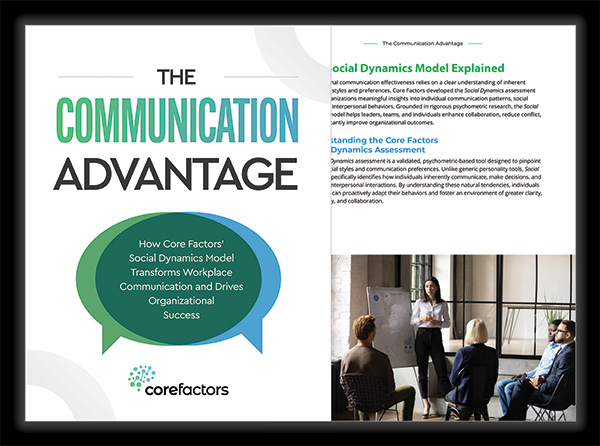
The Communication Advantage: How Core Factors' Social Dynamics Model Transforms Workplace Communication and Drives Organizational Success
Recommended Reading
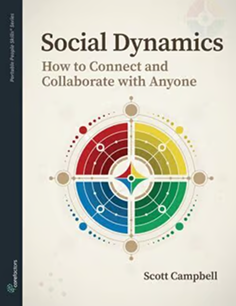
How to Connect and Collaborate with Anyone
This booklet reveals the hidden patterns that shape how people communicate, make decisions, contribute to teams, and respond to conflict. Discover how to turn differences into connection, and connection into productive collaboration.
View the Booklet