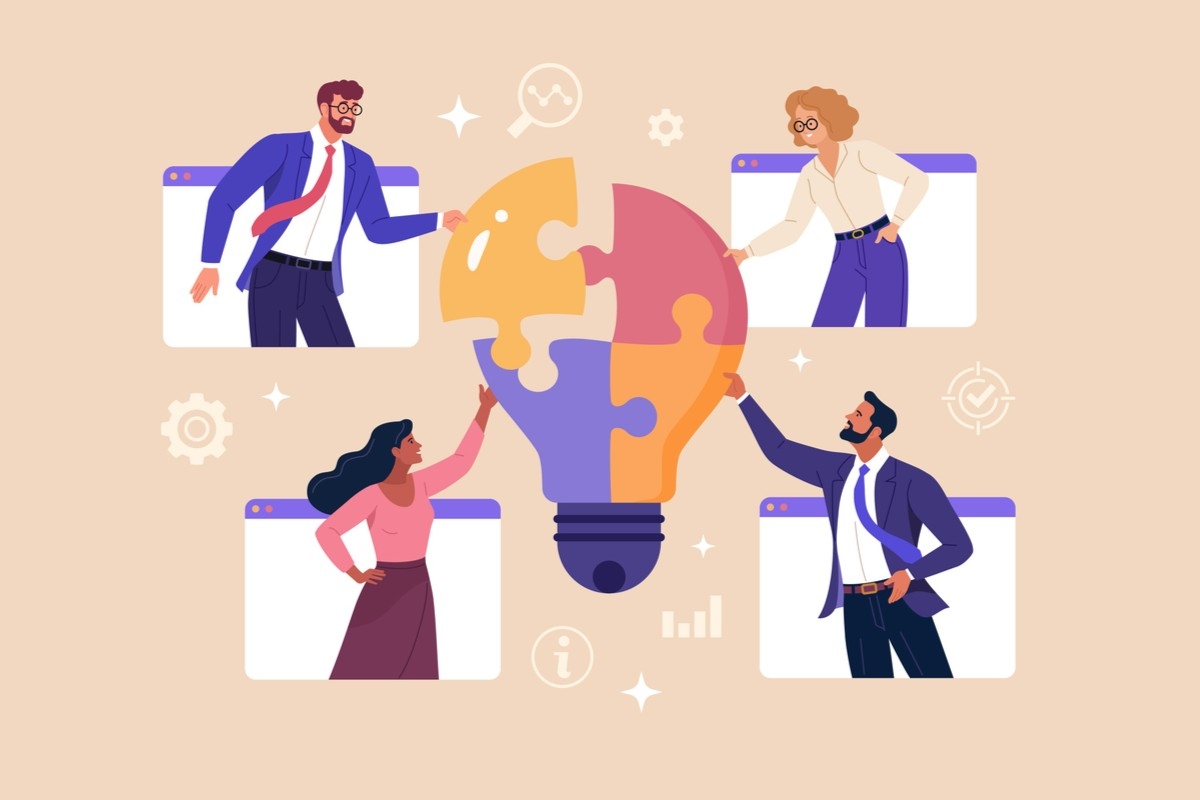
Collaboration is essential to modern work, yet for many teams it has become unexpectedly exhausting. Workers are spending more time than ever exchanging messages, attending meetings, and coordinating work across functions. And while organizations continue to emphasize collaboration, many employees feel their collaborative efforts drain more energy than they create.
Teams want to collaborate well, but what they often lack is a shared understanding of how people naturally engage with others and how those tendencies influence the flow of work. Social Dynamics provides this understanding by describing innate patterns of acting and interacting; it helps teams collaborate in ways that are energizing rather than depleting.
Why Collaboration Feels Harder Than It Should
Collaboration becomes draining when people interact in ways that unintentionally create friction. This friction comes from the small but predictable differences in how individuals approach problems, communicate, and participate.
Someone may jump into action, while someone else prefers planning. One team member may express ideas energetically while another processes internally. Someone may want to involve others early, while someone else prefers to refine ideas independently first. These differences reflect natural patterns that can support one another when understood, or strain one another when ignored.
Many collaboration challenges arise because their patterns collide without explanation. These collisions lead to inefficiencies, repeated conversations, emotional fatigue, and avoidable misunderstandings. When these patterns remain invisible, collaboration becomes more taxing than it needs to be.
The Behavioral Patterns Behind Collaboration
Social Dynamics identifies four natural patterns of how people interact with others: Mover, Mapper, Involver, and Integrator. Each brings unique strengths to collaboration, along with predictable challenges when working with different patterns.
The 4 Social Dynamics Styles
|
Mover: Energizing Progress Movers drive momentum. They help the team get started, make decisions, and maintain action. Their collaborative energy is forward-focused, and they contribute most when a project needs direction or acceleration. When misunderstood, Movers may appear rushed or overly direct, especially to teammates who prefer more reflection. |
Involver: Building Engagement Involvers encourage participation and shared enthusiasm. They help the team generate ideas and maintain energy. Their collaborative strength is connecting others into a cohesive group. When misunderstood, Involvers may seem unfocused or unrealistic, particularly to teammates seeking structure or closure, or to those less concerned about group involvement and buy-in. |
|
Mapper: Creating Structure Mappers bring coordination, clarity, and organization. They help the team define goals, understand roles, and sequence steps. Their collaborative contribution provides stability and focus. When misunderstood, Mappers may seem cautious or overly detailed to teammates who prefer spontaneous interaction. |
Integrator: Raising Quality Integrators offer refinement, insight, and alignment. They help the team think deeply and avoid mistakes. Their collaborative gift is thoughtful synthesis. When misunderstood, Integrators may seem slow or hesitant to teammates who prefer fast movement. |
These patterns reflect different ways of contributing to collaboration. When these differences are understood and valued by teams, collaboration becomes easier.
Why Collaboration Breaks Down When Patterns Aren’t Named
Miscommunication is the most common result of unspoken behavioral differences. Without a shared language for these differences, teams fill in the gaps with assumptions.
For example, a Mover’s directness may be interpreted as pressure; a Mapper’s questions may sound like objections; an Involver’s enthusiasm may feel like a distraction; an Integrator’s caution may seem like resistance.
These interpretations are rarely accurate, yet they influence how people often negatively respond to one another. This reaction amplifies emotional strain. Research and experience show that unclear expectations or rushed communication increase stress and reduce clarity, conditions that often emerge when collaboration patterns collide.
Collaboration overload intensifies these dynamics. Teams meet more often, communicate more frequently, and coordinate through more channels than ever before. When people collaborate without understanding each other’s patterns, the increased volume of collaboration makes it even more draining.
How Social Dynamics Makes Collaboration Easier and More Sustainable
Social Dynamics brings clarity to what often feels confusing by helping teams collaborate with greater accuracy, less effort, and more respect.
Helping Teams Interpret Each Other Accurately
Understanding patterns helps teams decode behavior. One person asking more questions might be seeking clarity or refinement rather than resisting. Someone brainstorming may be seeking to engage the team. Someone making fast decisions may be moving toward progress, rather than bypassing collaboration.
When team members understand intentions, communication becomes more constructive and less emotionally taxing.
Reducing the Volume of Communication Needed
Because people know what type of information each pattern needs, communication becomes more precise and teams spend less time repeating instructions or clarifying misunderstandings.. There is less need to revisit conversations or “circle back,” which reduces collaboration overload.
Balancing Strengths, So Collaboration Is More Effective
Each pattern contributes something essential. Social Dynamics helps teams intentionally draw on each pattern at the right time, so collaboration becomes a coordinated effort rather than a clash of tendencies.
Supporting Psychological Safety Through Predictability
Predictability reduces stress. When people know how others approach collaboration, they feel more secure speaking up, asking questions, or raising concerns. DDI’s research emphasizes that leaders who support open dialogue significantly increase trust and reduce conflict.
Predictability, paired with understanding, creates a safer environment for collaboration.
Practical Ways Teams Can Use Social Dynamics Right Away
Teams can begin applying Social Dynamics through small practices that immediately reduce strain.
1. Define the Purpose of Collaboration Before Starting
Ask: “Are we generating ideas, deciding, refining, or clarifying?”
This prevents mismatched expectations.
2. Invite Contributions Based on Natural Strengths
For example:
- Movers help the group move into action.
- Mappers organize ideas and next steps.
- Involvers energize the discussion.
- Integrators strengthen depth and quality.
This approach increases efficiency and ensures all voices are used strategically.
3. Adjust Communication to the Receiver’s Pattern
Ask questions such as: “Do you want the brief version or the structured version?” or “Do you want to talk through ideas or reflect first?”
These questions reduce fatigue and improve clarity.
4. Set Clear Collaboration Boundaries
Teams can clarify who needs to be involved at each stage, how decisions will be made, and when discussion ends and execution begins.
Boundaries reduce unnecessary involvement, which Deloitte identifies as a source of wasted capacity.
5. Check In on Energy and Engagement Levels
Ask: “Is our collaboration energizing or draining right now?” or “Do we need to adjust how we’re working together?”
Regular check-ins protect wellbeing and maintain forward momentum.
Collaboration Should Multiply Energy, Not Drain It
Collaboration becomes exhausting when behavioral differences remain invisible. When teams understand the Social Dynamics patterns that shape interaction, collaboration becomes clearer, smoother, and far more energizing. Misinterpretation decreases, engagement rises, and people feel more valued because their natural way of contributing is understood and appreciated.
Teams do not need to eliminate differences to collaborate well; they need to recognize and work with them. Social Dynamics provides the clarity that helps teams work together without wearing each other out, enabling them to achieve meaningful results with more ease and less strain.
FREE DOWNLOAD
The Communication Advantage: How Core Factors' Social Dynamics Model Transforms Workplace Communication and Drives Organizational Success
Podcast: Play in new window | Download