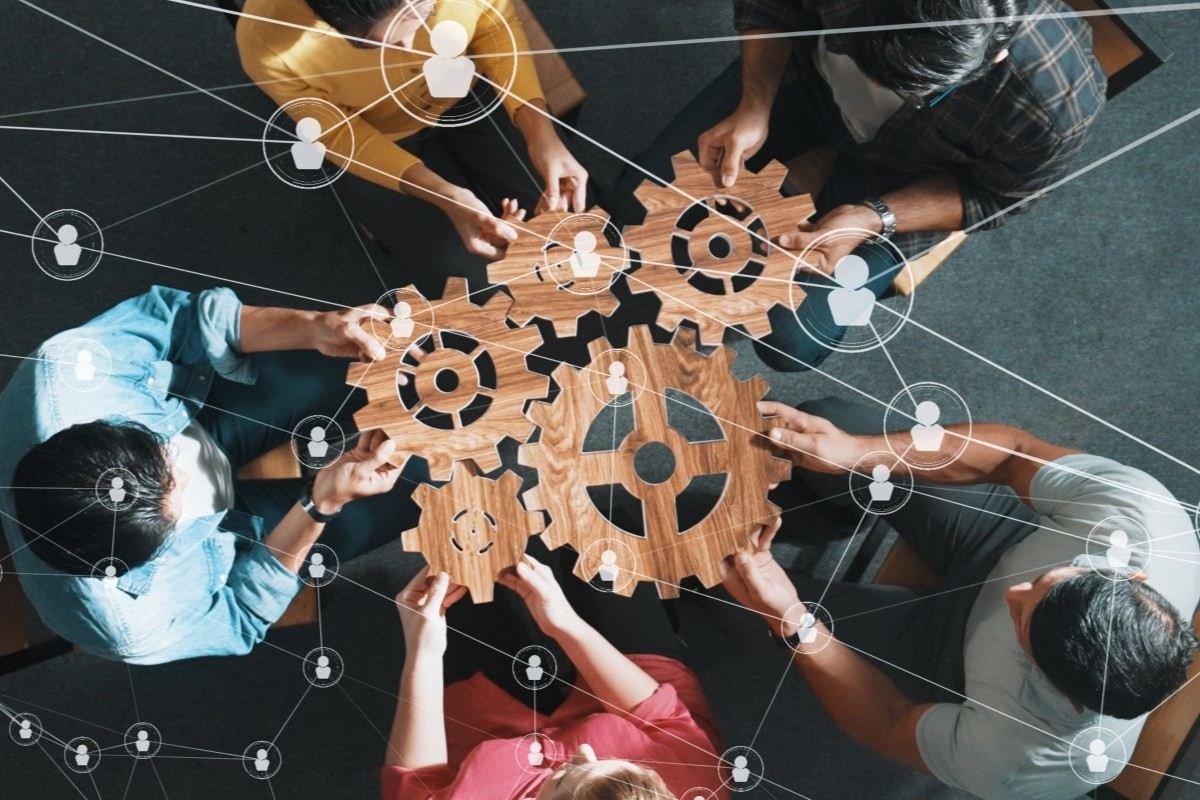
Every project begins with the belief that everyone understands the goal. Teams walk away from kickoff conversations feeling aligned, confident that they share a clear picture of success. Yet weeks later, frustration begins to surface. Work requires revision because it wasn’t what someone expected. Decisions feel premature to some and overdue to others. Some team members perceive the project as moving too slowly; others feel rushed. What once felt clear becomes cloudy, and without anyone intending it, the project stalls.
This experience is universal across organizations of all sizes and is rarely due to lack of skill, motivation, or effort. Instead, it reflects a fundamental reality: people hold different internal definitions of what success looks like, and they often don’t realize how different these definitions are until their work collides. In fast-paced work environments, these differences surface quickly.
Deloitte’s 2025 Global Human Capital Trends report highlights a critical concern: 41 percent of workers’ time is spent on tasks that do not meaningfully contribute to organizational outcomes, often because teams lack a shared understanding of priorities or deliverables[1]. When expectations are unspoken or inconsistent, misalignment accelerates. Work slows, stress rises, trust weakens, and projects that should progress smoothly become unnecessarily complex.
Social Dynamics offers a practical, human-centered framework to surface these differences early, before they stall progress, and to help teams co-create a shared understanding of what good looks like.
Why Misalignment Is So Costly
Misalignment rarely appears all at once; instead, it accumulates through small moment, like an unclear decision, a misunderstood request, or a difference in pacing. Yet the cumulative impact can be substantial. Work must be revised, slowing the project and increasing frustration. People begin to question one another’s effort or priorities. Managers spend more time resolving misunderstandings than advancing the project forward.
The American Psychological Association’s 2025 survey found that 38 percent of workers report that unclear communication negatively affects their mental health, especially during moments of change or ambiguity[2]. When people do not share a definition of success, they also lack confidence in the project. Ambiguity creates anxiety for some, impatience for others, and tension for the entire team. Eventually, a project that should have progressed smoothly begins to stall because the team lacks a shared perspective.
The Social Dynamics Lens: How Teams Understand Success Differently
Most project teams assume that clarity naturally results from conversation. If everyone hears the same words, alignment should follow. However, behavioral patterns heavily influence how individuals interpret expectations, timelines, quality standards, and success criteria.
Social Dynamics identifies four natural patterns of acting and interacting in meaningful situations: Mover, Mapper, Involver, and Integrator. Each pattern reflects a distinct approach to goals, decision-making, and progress assessment. These differences shape how each person interprets the phrase “a good outcome.”
Social Dynamics helps teams recognize that disagreements reflect natural, predictable differences. Consider how each pattern approaches success:
The 4 Social Dynamics Styles
|
Mover: Good Means Doable and Immediate Movers look for actionable next steps and forward momentum. If a project feels stuck in discussion or refinement, Movers may push ahead or interpret caution as unnecessary delay. Their strength lies in initiating action and maintaining momentum. |
Involver: Good Means Energized and Engaging Involvers want contributions to be embraced and meaningful. If the group seems disengaged or siloed, they may try to bring people back into conversation, which can feel like a diversion to action-focused team members. Their strength lies in building engagement and buy-in. |
|
Mapper: Good Means Clear and Well-Defined Mappers want to see a structured pathway. If expectations are ambiguous, they may pause or seek additional information, which others may misinterpret as hesitation. Their strength lies in creating clarity and logical frameworks. |
Integrator: Good Means Thorough and High-Quality Integrators look for refinement and alignment. If the team moves too quickly, they may raise questions that feel slow to others but actually prevent costly rework. Their strength lies in ensuring quality and completeness. |
The central insight: Teams don’t disagree on what to do—they disagree on what good looks like as they do it.
How Social Dynamics Helps Teams Stay Aligned
Social Dynamics offers teams a simple, practical way to bring clarity to their work. Instead of assuming what good means, teams learn to ask questions and articulate expectations based on natural tendencies.
- Surface Assumptions Early
When teams discuss what good means for each person, they identify potential misalignments early. This creates clearer expectations and reduces costly rework and revision cycles.
- Balance Speed, Structure, Engagement, and Quality
Each pattern represents a strength the project needs. Social Dynamics helps teams use all four strengths intentionally, rather than allowing one perspective to dominate and create imbalance.
- Make Better Decisions
Social Dynamics allows teams to name whether a given moment requires quick action, deeper reflection, clearer structure, or broader engagement. This reduces friction and increases confidence in decision-making.
- Navigate Tension Without Escalation
When a pattern leans strongly in one direction, others understand why and respond thoughtfully rather than defensively. This strengthens psychological safety and trust within the team.
Practical Applications: How Teams Can Use Social Dynamics to Stay Aligned
Teams do not need formal training sessions to begin benefiting from Social Dynamics. Simple, everyday practices make a meaningful difference.
Start Every Project With an Alignment Conversation
Ask clarifying questions early:
- What does a successful outcome look like to you?
- What concerns you most at this stage?
- What helps you stay grounded as we move forward?
These questions reveal differences in expectations before work begins, preventing downstream conflicts.
Clarify Decision-Making Needs
Identify whether the outcome needs to be:
- Fast (action-oriented)
- Clear (well-structured)
- Supported (broadly engaged)
- High-quality (thoroughly refined)
Naming this requirement reduces unnecessary tension and competing priorities.
Use Check-Ins to Reconfirm Alignment
Ask periodically:
- Is the pace working for you?
- Are we aligned on what’s needed next?
- Does anyone need more clarity before we proceed?
These moments prevent small misunderstandings from compounding into larger problems.
Lean Into Each Pattern’s Strengths at the Right Time
Consider how to intentionally sequence the project:
- Movers help the team start and initiate action
- Mappers help the team plan and structure the work
- Involvers help the team engage and build buy-in
- Integrators help the team refine and ensure quality
When these strengths are honored intentionally, alignment improves and efficiency increases.
Alignment Through Understanding
Project stalls are not inevitable and are largely preventable when teams understand the natural patterns that shape how people define success. Social Dynamics helps teams surface expectations early, communicate more clearly, and navigate differences with less friction and greater trust.
When teams create shared meaning around what good looks like, they move more confidently, collaborate more effectively, and maintain alignment even in fast-changing environments. Clarity grows, tension decreases, progress becomes easier, and work feels more purposeful for everyone involved.
References
[1] Deloitte. (2025). 2025 Global Human Capital Trends Report. https://www.deloitte.com
[2] American Psychological Association. (2025). Work and Well-Being Survey.
FREE DOWNLOAD
The Communication Advantage: How Core Factors' Social Dynamics Model Transforms Workplace Communication and Drives Organizational Success
Podcast: Play in new window | Download