WHAT YOU GET

WHAT YOU GET
The Participant Experience Participants access results through the Participant Hub, where they explore full descriptions of all 16 types (~2,400 words each), use the Compare and Connect tool, and work through guided questions for bridging differences.
The Practitioner Platform Practitioners receive a separate report with detailed cognitive process scores. You administer through the Pro Account with project-based management, PDF and on-screen reporting, participant feedback, and NPS documentation.

Type Dynamics changes that. The assessment handles the measurement. The report introduces the framework in language your participants can use. You bring the expertise. The instrument brings the structure. That combination means your clients do not just learn their type code. They learn how their mind works.
WHO THIS IS FOR


THE BIGGER PICTURE
Type Dynamics was built for that conversation. When your clients see the system beneath their type, they stop asking “what am I?” and start asking “how do I work?” You stop being the practitioner who explains type. You become the one who opens the door to development work that was never possible with the four letters alone.

Through that work, he identified problems that classical measurement could not solve. Forced-choice formats produce artificial results for people whose preferences are not clear-cut. Population-level norms obscure individual differences. And no instrument was assessing the eight Jungian cognitive processes or the barriers that block natural personality expression. His response, developed over more than 25 years: a non-forced-choice format, Differential Intensity Weighting, a Type Precision Module, and the first assessments to measure both the eight cognitive processes and Personality Formation. Dr. Majors holds a Ph.D. in Counseling Psychology and Multicultural Studies from the University of Nebraska-Lincoln.
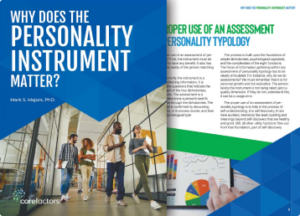
Download his report Why Does the Personality Instrument Matter?
GET STARTED WITH PRO ACCESS


The Core Factors Type Dynamics assessment introduces psychological type through the lens of the eight cognitive processes, offering a deeper and more accurate representation of the type code.
Type Dynamics measures four perception processes (External Sensing/Se, Internal Sensing/Si, External Intuiting/Ne, Internal Intuiting/Ni) and four judgment processes (External Thinking/Te, Internal Thinking/Ti, External Feeling/Fe, Internal Feeling/Fi). Each person relies most on two primary processes while the others influence behavior in different ways.
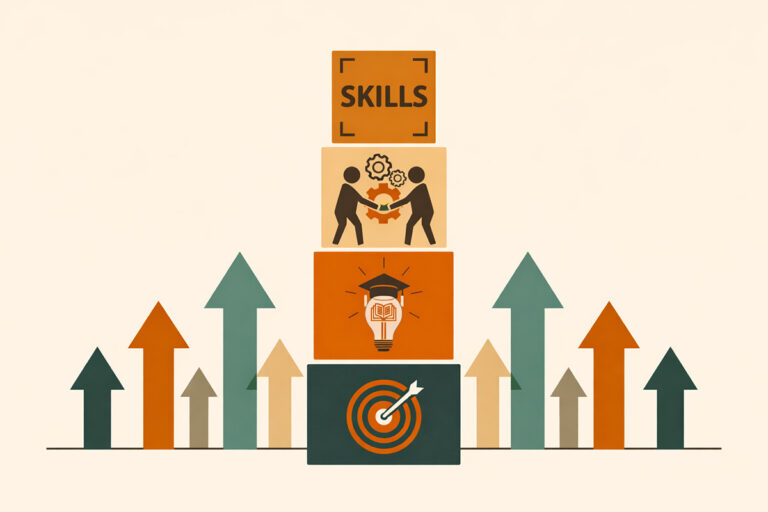
Type Dynamics presents each personality type as a pattern of eight cognitive processes arranged in a specific hierarchy. The report shows both primary processes (1st through 4th, operating more consciously) and shadow processes (5th through 8th, operating more unconsciously). This reveals not just what type someone is, but how that type functions.
Type Dynamics is designed for professional type practitioners: coaches, facilitators, counselors, and organizational consultants who want to introduce the psychological type code as it was originally intended. It serves those who want to apply psychological type in a deeper, more meaningful way that goes beyond static labels.
Dr. Mark S. Majors is a distinguished expert in psychological assessment with a Ph.D. in Counseling Psychology and Multicultural Studies from the University of Nebraska-Lincoln. His extensive experience includes work with MBTI instruments, and he developed the entire Core Factors suite, including Type Discovery, Type Elements, and Type Dynamics.
Type Dynamics is grounded in Carl Gustav Jung’s 1921 theory of psychological types, describing innate psychological characteristics expressed in everyday thoughts and actions. It also builds on the framework developed by Isabel Briggs Myers and her mother Katharine Briggs, who created the four-letter type code to help identify Jung’s described personality types.
Type Dynamics uses the core 52 primary questions of Type Discovery plus an additional 80 questions specifically designed for the eight processes, along with an optional Type Precision Module. Completion time is similar to other comprehensive type assessments.
The 13-page report provides an introduction to psychological type through the lens of the eight cognitive processes, reported scores, a descriptive overview of the identified type, and brief summaries of the 16 personality types. It presents type as a dynamic system of cognitive processes rather than static letter preferences.
Type Dynamics supports introducing clients to psychological type through its original design, helping leaders understand how preferred processes affect decision-making and leadership style, guiding coaching and counseling conversations with greater insight into perception and judgment patterns, and supporting team development by highlighting how different cognitive processes influence group dynamics.
Yes. Type Dynamics identifies the same 16 types measured by MBTI and other Jungian type instruments. It expands understanding by exploring the full process pattern behind the type code, making it a natural extension for those trained in MBTI-based tools.
DISCOVER MORE TOOLS