Free Special Report

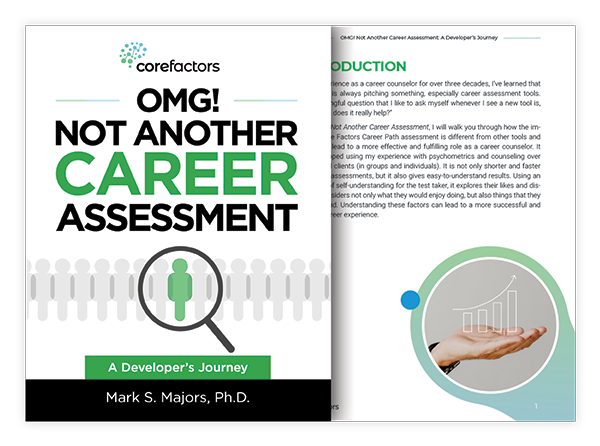
OMG! Not Another Career Assessment

A Developer’s Journey, by Mark S. Majors, Ph.D.
Mark Majors, the counseling psychologist who developed the Core Factors Career Path assessment, explains why career fit depends on what a client wants to avoid as well as what a client prefers, and how to use both sides of the results in career counseling.
We need to store and process your personal data to provide you with the requested content and send relevant follow-up communications. Feel free to unsubscribe at any time. See Privacy Policy for further details.

What you take away

Three Problems This Special Report Helps You Solve

Search icon used to initiate a search
A Way to Identify What a Client Wants to Avoid
Majors observes that people leave jobs because a job involves too much of what they dislike. Career Path reports preference and avoidance for each of the 11 Occupational Activity Groupings (OAGs). A client can then check an occupation against the activities they want to avoid before accepting a role.
Could not identify image content. Please provide context or a description to generate accurate ALT text.
Guidance for Presenting Results Before a Client Reads Them
Clients can read a career report as an instruction to pursue a specific occupation. Majors explains why a career counselor guides a client to narrow the options rather than prescribing a career. He recommends discussing what the report shows and what the graphs represent before the client reads the results.
Search icon: magnifying glass inside a circular button, indicating the search action
A Clear Reading When a Client Likes and Dislikes Parts of the Same Area
The Career Path report can show equal percentages of preference and avoidance for one Occupational Activity Grouping. Majors explains that this result means the client likes some tasks and activities in that area and dislikes others. You can use that detail to help a client tailor a job search to avoid the activities they dislike in that area.

Inside the special report

Twenty-Two Pages from the Developer of Career Path

01

Introduction

02

The History Behind the Core Factors® Career Path Assessment

03

The Role of a Career Development Counselor

04

OMG! Not Another Career Assessment

05

The Importance of Self Understanding

06

How Should I Use the Core Factors® Career Path Assessment With Clients?

07

Why Do I Need Another Career Assessment?

08

Appendix: Occupational Activity Groupings

09

Appendix: Global Interest Areas

The design

Built from Three Decades of Career Counseling

Career Path grew out of Majors’s work on the Strong Interest Inventory at Consulting Psychologists Press from 1992 to 2001 and his career counseling with high school and college students. He gave test-takers an established interest inventory along with questions of his own, and he began writing items for his own assessment from the data he collected.

11

Occupational Activity Groupings

Each grouping is reported in both directions: how much the client prefers the tasks and activities in the area and how much the client wants to avoid them.

6

Global Interest Areas

The six areas parallel the Holland code, from Working with Physical Things to Organizing Work and Environments.

1,000+

Clients Counseled

Majors developed Career Path from his psychometric experience and his career counseling of more than a thousand clients, in groups and individually.

Why avoidance is scored

Majors notes that on interest inventories, a low score is often read as disinterest. He built Career Path to give a direct result for what a person wants to avoid, so the client and the counselor can see dislikes alongside interests.
Smiling older man with gray hair and beard, wearing a dark blazer and blue plaid shirt.

About Mark S. Majors, Ph.D.

Mark S. Majors, Ph.D., is a counseling psychologist who worked with Consulting Psychologists Press from 1992 to 2001 as a contractor and as an in-house research scientist. He did the data analysis for the MBTI® Form M revision and the 1994 Strong Interest Inventory, developed the IRT scoring for the MBTI Form Q, co-authored the MBTI Form Q Manual, and led the psychometric and scoring development of the Strong Interest Explorer. He is the principal developer of the Core Factors Type Discovery, Type Elements, Type Dynamics, Career Path, Career Signals, and Social Dynamics assessments. He holds a Ph.D. in Counseling Psychology and Multicultural Studies from the University of Nebraska-Lincoln.

This special report draws on his work on the Strong Interest Inventory and on the career counseling he began in 1992.

More special reports

Free Special Reports for Practitioners

Cover page: the title 'Why does the personality instrument matter?' with a diverse group of people in a modern office and the CoreFactors logo.
Why Does the Personality Instrument Matter?
Mark Majors explains the standards for judging a type instrument and how to present a type assessment to clients as a tool for self-understanding.
Request the Report
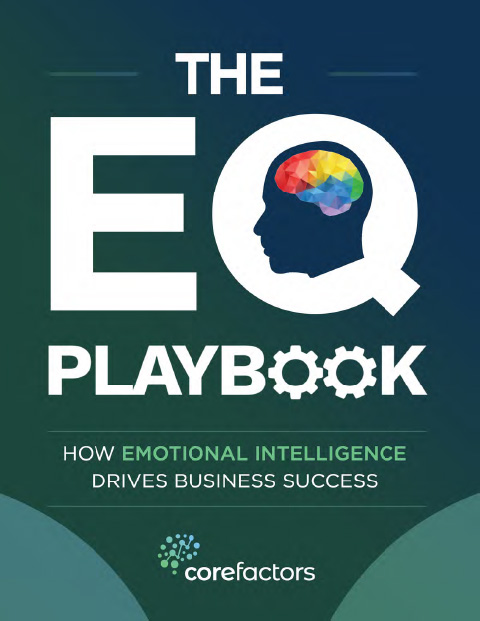
Book cover: 'The EQ Playbook' with a head silhouette and colorful brain; subtitle 'How Emotional Intelligence Drives Business Success'.
The EQ Playbook: How Emotional Intelligence Drives Business Success
This special report compares the major emotional intelligence models and sets out four steps for building an EQ development program.
Request the Report
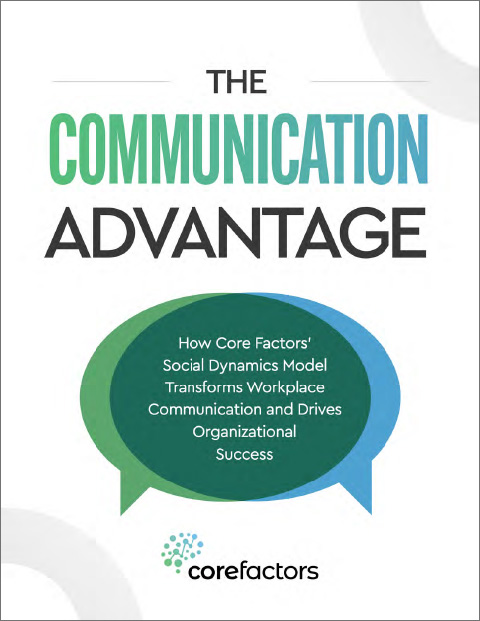
Book cover titled 'The Communication Advantage' featuring overlapping green and blue speech bubbles and the CoreFactors logo.
The Communication Advantage: How Core Factors’ Social Dynamics Model Transforms Workplace Communication and Drives Organizational Success
This special report shows how the Social Dynamics model applies to leadership communication, conflict, team collaboration, and delegation, with a four-step plan for building it into development programs.
Request the Report
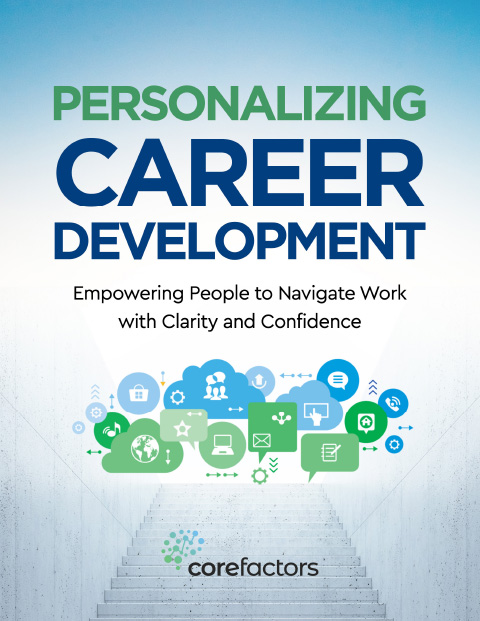
Cover image: the title 'Personalizing Career Development' with subtitle and a blue‑green icon cluster above steps; CoreFactors logo at the bottom.
Personalizing Career Development: Empowering People to Navigate Work with Clarity and Confidence
This special report shows how practitioners use Career Path preference and avoidance results in career conversations, transitions, student advising, and talent decisions.
Request the Report