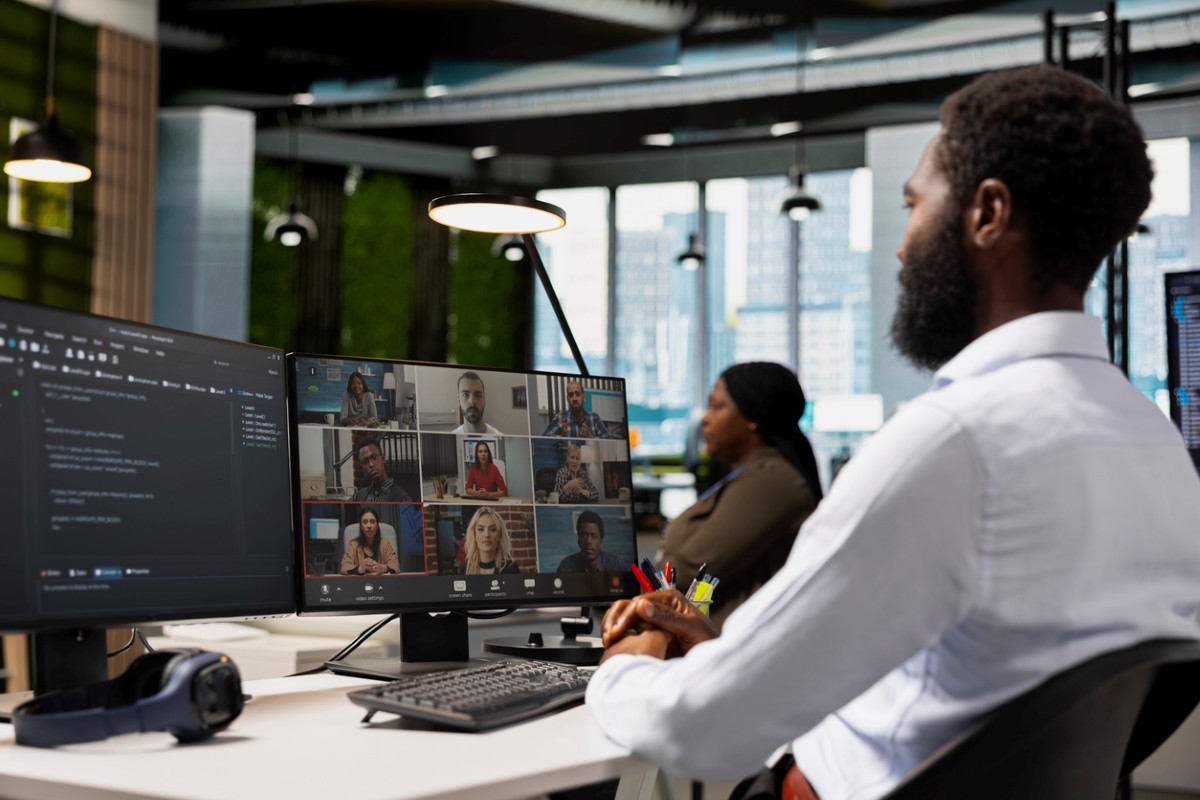
Hybrid work has opened new possibilities for flexibility, autonomy, and work–life balance. Yet it has also introduced a challenge many organizations did not anticipate: staying connected in ways that feel authentic, supportive, and human. Video calls replace hallway conversations, chat messages replace tone and nuance, and asynchronous workflows replace the natural rhythm of shared physical spaces. While hybrid work offers real advantages, many teams quietly struggle with distance, misunderstanding, and fragmentation.
Gallup’s 2025 State of the Global Workplace Report reflects this shift, showing that exclusively remote employees report daily loneliness at 27 percent, compared with lower rates among on-site teams. Loneliness is not the only concern. Misunderstanding rises as behavioral cues diminish. APA’s Work in America 2025 survey further shows that unclear communication and sudden expectations increase stress and reduce wellbeing. When interactions lose richness, people often fill in the gaps with assumptions.
Social Dynamics gives leaders and teams a practical way to navigate hybrid communication differences. By understanding natural interaction patterns, teams can restore the connection, clarity, and cohesion that make work feel human even when people are not physically together.
Why Hybrid Work Makes Connection Harder
Hybrid teams experience both the benefits and the strain of physical distance. Without shared spaces, individuals lose subtle interpersonal cues that help them interpret meaning accurately. Small misunderstandings multiply. People become cautious about tone or worry their messages are being misread. Team members who rely on relational interaction may feel disconnected, while those who prefer reflection may feel overwhelmed by digital noise.
These challenges arise when teams carry natural behavioral patterns into environments where those patterns are harder to recognize. When differences are not named or understood, hybrid work amplifies them.
Common examples include quick messages feeling abrupt, pauses in virtual meetings feeling longer and more ambiguous, facial expressions and tone becoming less reliable, silence being interpreted inconsistently, and digital threads obscuring pacing. Without shared behavioral understanding, teams are left guessing at intention.
Natural Patterns Become More Visible and More Misinterpreted Online
Social Dynamics identifies four natural patterns of acting and interacting: Mover, Mapper, Involver, and Integrator. These patterns appear everywhere, but hybrid environments accentuate them because the usual buffering cues are absent.
The 4 Social Dynamics Styles
|
Movers in Hybrid Work Movers prefer direct communication and timely responses. They may interpret delayed replies as disengagement. Their quick messages may seem blunt in writing, even when intended to be efficient. Without the ability to read body language, others may misinterpret their speed as pressure. |
Involvers in Hybrid Work Involvers draw energy from interaction, collaboration, and real-time engagement. Remote work reduces spontaneous connection. Without intentional relationship-building, they may feel disconnected or worry about team cohesion. Their efforts to reintroduce connection can feel excessive to others. |
|
Mappers in Hybrid Work Mappers value clarity, structure, and detailed expectations. Hybrid environments, often ambiguous and changing, can feel destabilizing. If instructions are unclear or messages lack context, they may slow down to regain structure, which others misinterpret as hesitation. |
Integrators in Hybrid Work Integrators prefer thoughtful reflection and carefully constructed decisions. Hybrid environments with fast-moving digital communication may feel rushed or fragmented. Without adequate context or time, they may withdraw or become quieter in group settings. |
None of these responses are problematic. Misinterpretation becomes the issue when teams assign meaning without understanding patterns.
The Hidden Cost of Misinterpreting Behavior in Hybrid Work
Misinterpretation is one of the most costly dynamics in hybrid environments. Teams often make assumptions such as slow response equals disengagement, quick response equals impatience, many questions equal criticism, or few questions equal agreement.
These assumptions create tension and distance. Psychological safety decreases as people become cautious about expressing themselves. Collaboration slows, and stress rises. APA’s research confirms that unclear communication and shifting expectations increase stress, conditions amplified by hybrid work.
As stress increases, people rely more heavily on their natural pattern, which intensifies contrast and misunderstanding.
How Social Dynamics Restores Connection and Clarity in Hybrid Teams
Social Dynamics gives hybrid teams a framework for interpreting behavior accurately and communicating intentionally. When teams understand patterns, behavior is no longer taken personally.
Decoding Behavior With Greater Accuracy
A delayed response from an Integrator becomes reflection, not withdrawal. A quick decision from a Mover becomes momentum, not disregard. A Mapper’s questions become clarifying, not challenging. An Involver’s energy becomes engagement, not distraction.
Supporting Predictable Communication Routines
Hybrid work becomes more stable when communication is predictable. Social Dynamics helps teams align on when decisions are made, how much detail is needed, how much discussion is appropriate, and when reflection is expected.
Helping Leaders Tailor Support
Gallup research shows that manager effectiveness strongly influences hybrid engagement. Social Dynamics helps leaders respond to what each pattern needs: timely direction for Movers, structure for Mappers, connection for Involvers, and clarity with time for Integrators. Programs such as EQ Accelerator help leaders apply these insights consistently.
Rebuilding the Social Fabric in Hybrid Work
By intentionally creating moments of connection and clarity, teams restore cohesion. Involvers and Movers often carry relational energy, while Mappers and Integrators benefit from clear transitions and expectations. Hybrid work becomes less isolating and more grounded.
Practical Ways to Use Social Dynamics to Improve Hybrid Connection
Teams can apply Social Dynamics immediately through simple, repeatable practices.
Name the Purpose Before Communicating
Stating whether a message is an update, request for input, or decision reduces misinterpretation.
Clarify Pacing Expectations
Signals such as whether a response should be immediate or reflective prevent emotional misreading.
Balance Synchronous and Asynchronous Collaboration
Real-time discussion supports Movers and Involvers, while advance materials support Mappers and Integrators. Balanced design benefits everyone.
Create Micro-Connections
Brief check-ins, expressions of gratitude, and acknowledgment of contributions restore humanity in hybrid work.
Normalize Pattern-Based Questions
Asking about preferred detail, pacing, or structure honors natural tendencies and reduces friction.
Encourage Transparency About Needs
Sharing how one tends to work builds trust. Over time, teams strengthen collaboration skills supported by Developing People Skills and Type Dynamics.
Hybrid Work Feels Human When People Understand Each Other
Hybrid work does not need to feel distant or disconnected. It becomes more human when teams understand the behavioral patterns that shape communication and response. Social Dynamics gives teams a shared language to interpret behavior, reduce stress, and support one another intentionally.
With clearer understanding, communication improves, misinterpretation decreases, and hybrid work feels less like a technical challenge and more like meaningful collaboration.
With Social Dynamics, teams stay aligned, connected, and confident, no matter where they work.
FREE DOWNLOAD
The Communication Advantage: How Core Factors' Social Dynamics Model Transforms Workplace Communication and Drives Organizational Success
Podcast: Play in new window | Download